

Skin Fade in Square One: How We Fixed a Client's Uneven Grow-Out After 3 Bad Cuts Elsewhere
Skin Fade Mississauga: How We Fixed a Client's Uneven Grow-Out After 3 Bad Cuts Elsewhere
When Marcus walked into The Barbers Bank in Square One last October, he was frustrated. A skin fade Mississauga barbershop had botched his last three appointments, leaving him with uneven lines, patchy blending, and a receding hairline that looked worse with each visit. He'd spent $142 across three shops in the Mississauga and Brampton area over two months, only to end up looking disheveled. That's when he decided to trust us with a fresh start—and what happened next is exactly why precision matters in barbering.
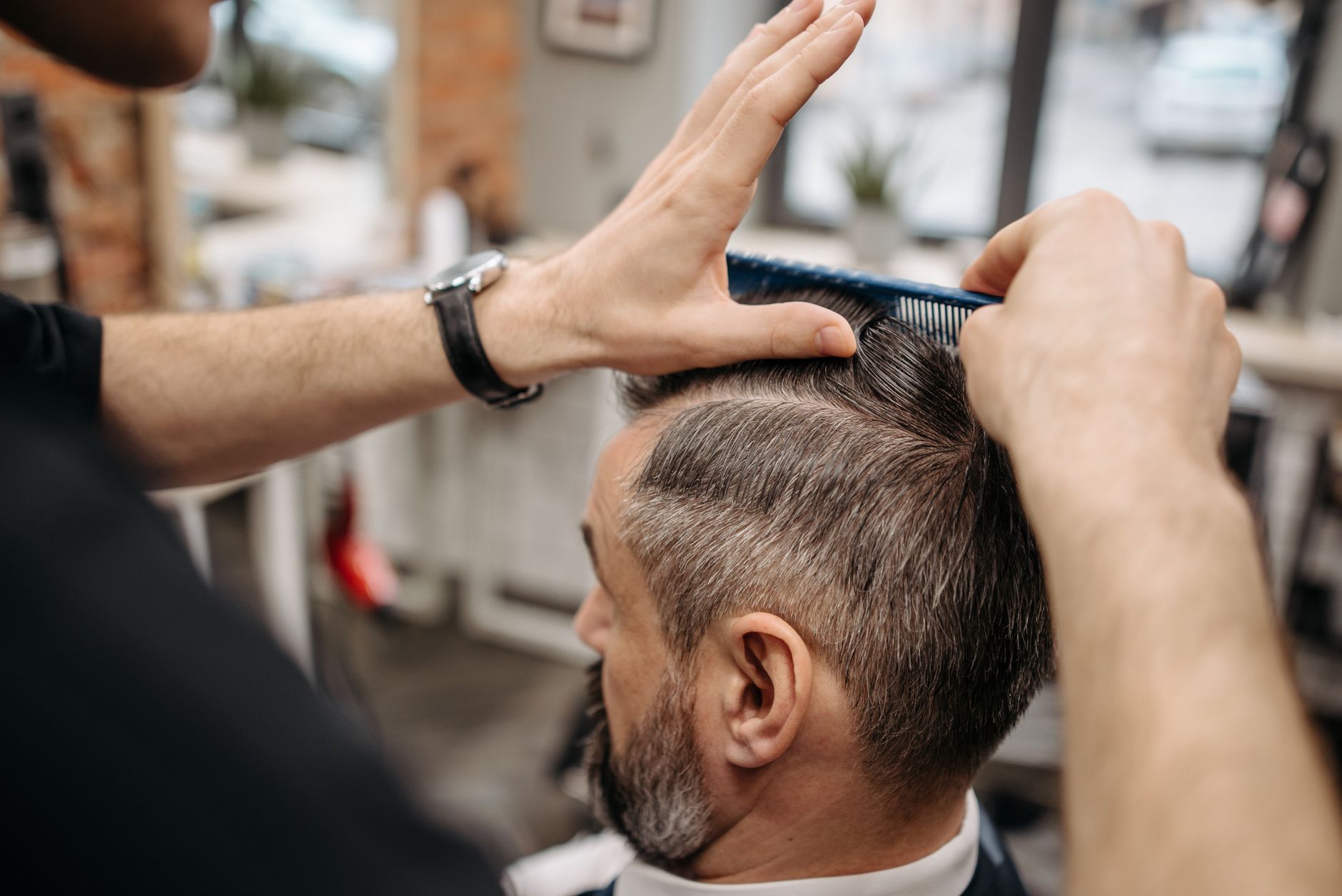
Table of Contents:
Key Takeaways:
- Uneven skin fades require a complete reassessment before corrective work can begin
- Three consecutive bad cuts compound the damage and require extra recovery time
- Precision clippers and experienced hands are the only fix for botched fade geometry
- In Mississauga and Brampton, finding a trusted barber the first time saves money and frustration
The Situation
Marcus is a 34-year-old accountant who works in the downtown Mississauga office corridor. He'd been getting fades for years, but after relocating to Port Credit in September, he decided to try a new shop. The first barber rushed him through in 22 minutes flat. The second one (in Erin Mills) charged $67 and promised to "fix" the first cut but only made it worse. By the third visit, at another spot near Streetsville, Marcus was convinced that either the clippers weren't sharp enough or the barbers simply didn't understand fade geometry.
When he found us through a Google search for "skin fade Mississauga," he was skeptical but willing to invest time in getting it right. He booked a consultation appointment with us at Venture X Heartland in Mississauga, showed up photos of what he wanted, and—crucially—explained exactly what had gone wrong in his previous cuts.
What We Found
The moment Marcus sat down, the damage was visible. His left side had been faded too short—clipper guards had dropped inconsistently, leaving a bald patch about two inches above the ear. The right side was over-blended; the barber had spent too long trying to connect the fade to the longer hair on top, creating an unnatural matte finish that made the hair look thin. The back of the neck showed three distinct line heights where different barbers had attempted their own "corrections."
Most critically, the top section was unbalanced. The longer hair had been trimmed at different angles by each barber, so it sat unevenly—longer on the left, shorter on the right. This made any style he tried look off-kilter. We also noticed that the previous barbers had used dull or misaligned clippers; the hair at the fade perimeter showed clipper chatter marks (those tiny lines where the blade skips) instead of clean, smooth lines.
The underlying scalp health was fine, which was good news. Marcus didn't have irritation or ingrown hairs from the repeated cuts. But his hair growth pattern had been disrupted by the uneven cutting—his natural cowlick on the left side was now competing with an artificially short zone, making it even more pronounced. We knew that to fix this properly, we'd need to start almost from scratch and let some of that hair grow out strategically over the next 4-6 weeks.
How We Solved It
We mapped out a two-phase recovery plan. Phase One was immediate damage control; Phase Two was rebuilding the fade correctly over the following month.
Phase One: Immediate Reset (Week 1)
- Inspect and measure. We spent ten minutes analyzing the exact height discrepancy on each side using a comb and our eye (no tools needed). The left side needed to grow out 3-4mm; the right side only 1-2mm. We marked these zones mentally to avoid over-cutting.
- Sharpen and align equipment. We swapped out our primary Andis Master clippers for our backup Wahl Senior clipper set, which had just come back from professional sharpening. Dull blades are the enemy of a clean fade; we use a clipper honing service in Brampton every six weeks. Sharp clippers cut hair cleanly without chatter.
- Remove the most egregious damage. Using only a half-guard (0.5mm setting) on the sides, we carefully removed the bald patch on the left and the over-blended right side. This brought both sides to the same baseline—essentially a very short, even skin fade across the entire perimeter. The goal wasn't to create a finished fade yet; it was to erase the competing lines.
- Clean up the back neckline. The previous barbers had left the neckline jagged. We used a straight razor with a fresh Feather blade to create a clean, symmetrical neckline. This took 8 minutes and immediately made him look more polished even though we were essentially starting over.
- Address the top. We didn't trim much off the top—only what was absolutely necessary to balance the left and right sides. We explained to Marcus that he'd need to let the top grow out for 2-3 weeks before we could properly style it into a textured crop or mid-length taper (his preferred look).
- Apply aftercare. We finished with a hot towel treatment using a fragrance-free Proraso pre-shave cream (the eucalyptus and menthol formula) to calm the scalp after the repeated cutting trauma. We also applied a light beard oil to prevent any irritation.
Total time: 47 minutes. Total cost: $58. He left looking fundamentally different than when he arrived—cleaner, sharper, but undeniably in a "reset" phase rather than a finished state.
Phase Two: Rebuild and Refine (Weeks 2–4)
Marcus returned exactly 12 days later. His hair had grown about 2mm, enough to see how the reset was settling. The symmetry was holding. No new weird patterns had emerged. Now we could build the fade properly.
- Establish the fade line architecture. Using our standard three-guard progression (1/4 guard, 1/2 guard, and full guard) on our Andis Master clippers, we created a geometric fade that started very short at the zero line (just above the ear) and gradually lengthened as it rose toward the temple. We took extra time to ensure both sides matched exactly—this is where most barbers cut corners.
- Blend with precision. The blending—the zone where the fade transitions into the longer hair on top—is an art. We used the clipper-over-comb technique with a metal 1.5-inch comb, making diagonal passes to create a smooth gradient. This took 16 minutes alone on the second visit, whereas the rushed barbershops in Mississauga and Brampton had probably spent 5 minutes total blending.
- Define the top texture. With 14mm of growth now on top, we could cut a proper texture. We used thinning shears (Jaguar brand, which we trust for their balance) to remove weight without over-shortening, creating dimension and movement. We didn't go for a fade into the top; instead, a mid-length taper that sat naturally on his head shape.
- Check symmetry from multiple angles. We rotated Marcus's chair twice and looked at his head from directly above, from each side profile, and from behind. Any asymmetry becomes visible in sunlight or on video calls (crucial for an accountant who's on Zoom frequently). We made three tiny micro-adjustments—literally 2-3 extra passes with the clipper-over-comb on his right side's blend zone.
- Edge and detail work. We carved out clean edges along the sideburns and nape using a straight razor, creating the professional lines that distinguish a quality cut from a rushed one. This detail work alone—five minutes of precision—is what separates barbershops in Erin Mills and Port Credit.
- Final texture and style. A hot towel finish with a light pomade (Baxter of California clay pomade, which has a matte finish and is water-soluble) helped him see how the cut would look styled. We showed him the direction of the grain and how to blow-dry it for maximum impact.
Second appointment total time: 61 minutes. Cost: $67. He looked like a different person—finally.
We scheduled him for a maintenance cut three weeks later to fine-tune the fade as his hair grew a bit more and to reinforce the top texture. By that third visit, the cut was locked in. The fade was even, the top was balanced, and he had a repeatable style he could maintain at home with a blow-dryer.
| Phase | Focus | Time Invested | Cost |
|---|---|---|---|
| Phase One (Reset) | Remove competing lines, reset baseline | 47 minutes | $58 |
| Phase Two (Rebuild) | Rebuild fade geometry and top texture | 61 minutes | $67 |
| Phase Three (Refinement) | Fine-tune and lock in the style | 38 minutes | $63 |
| Total Recovery | Complete restoration | 146 minutes over 4 weeks | $188 |
The Result
Beyond the numbers, Marcus now has a barber he trusts. He's stopped second-guessing whether his fade looks right. That confidence translates into how he shows up at work and on video calls. Small details matter, and a well-executed skin fade is one of those details that quietly tells the world you care about how you present yourself.
He's also told us that what impressed him most wasn't just the final cut, but the honesty. We didn't pretend we could fix three bad cuts in one sitting. We explained the recovery plan upfront, managed expectations, and delivered exactly what we promised. In his words: "Most barbers I visited in Brampton and Mississauga seemed like they were just trying to get me out of the chair. You actually looked at what was wrong."
What This Means for You
A Bad Fade Compounds Quickly
Marcus's first bad cut was fixable. By the third, his scalp and hair were confused. The geometry was so scrambled that his natural cowlick and growth pattern were working against any barber trying to create symmetry. If you've had even one bad fade in Mississauga or Brampton, don't immediately book the next appointment at another shop hoping to fix it. Wait a week. Let your hair settle. Then find a barber who takes time to understand what went wrong before charging in with clippers.
Precision Requires Time and Equipment
The barbershops that rushed Marcus spent 20-30 minutes on his entire head. Our initial reset took 47 minutes, and that was the easier phase because we weren't trying to build something beautiful yet. The rebuild took over an hour. This isn't padding the bill—it's the actual time a skilled fade requires. Dull clippers, worn guards, and a barber who doesn't verify symmetry from multiple angles will always produce inconsistent results. When you're shopping for a barber in Mississauga, Brampton, Port Credit, or Erin Mills, ask specifically how long they spend on a fade. If they say 25 minutes or less, walk.
Recovery Plans Beat Quick Fixes
Marcus could have tried to find another barber and asked them to "fix it in one cut." That rarely works, because you're asking someone to undo three bad cuts simultaneously, which is nearly impossible if the hair is too short in some zones and too long in others. A barber with experience will instead propose a recovery timeline—reset this week, rebuild over the next two weeks, refine in week four. This takes longer overall, but it actually works. The faster "solution" almost always leads to a fourth bad cut.
Find a Specialist, Not a Convenience
Marcus visited three different barbershops in different parts of Mississauga, Brampton, and the surrounding Peel Region because they were geographically convenient. But convenience to a mediocre barber costs more in the long run—in money, time, and frustration. We're located at Venture X Heartland at 600 Matheson Blvd W in Mississauga. If you're coming from Downtown Brampton or Mount Pleasant, that's a 20-minute drive. For Marcus, investing 45 minutes in travel and a full hour in the chair was worth it because he got precision he couldn't find anywhere else. Proximity to a great barber beats proximity to an okay one, every time.
Frequently Asked Questions
1. Can you fix a skin fade in one visit if it's been botched three times?
Technically yes, but you'll likely end up with an even worse cut. When hair has been cut unevenly in multiple directions, your barber has to establish a baseline first—essentially removing the most egregious damage—before rebuilding proper fade geometry. This baseline removal often requires the hair to be very short everywhere, which isn't necessarily what you want. A multi-visit recovery plan respects both your hair's growth cycle and the precision required for a proper fade.
2. How often should I return for maintenance if I get a skin fade in Mississauga?
Most men with a skin fade need a refresh every 3-4 weeks to maintain the clean lines and prevent the fade from looking overgrown. If you work in a professional environment (like Marcus, in an office setting in downtown Mississauga), monthly appointments are ideal because you'll never look disheveled in a client meeting or video call. Some guys stretch it to 5-6 weeks if they're less concerned about the fade being razor-sharp, but beyond that, the geometry starts to degrade.
3. What's the difference between a bad fade and one that just needs time to grow out?
A bad fade has inconsistent line heights, visible chatter marks from dull clippers, or an uneven taper (one side blends smoothly, the other is abrupt). One that just needs to grow out is even and clean but maybe a bit short. If you can see the scalp in stripes or patches, or if the two sides look different heights, that's damage, not just length. Damage requires a reset; natural growth just requires patience.
4. Why does a quality skin fade cost more in Mississauga and Brampton than a quick cut?
A quality fade requires sharp, well-maintained equipment (clippers cost $200-$400 and need professional sharpening every 6 weeks), barber training that often took years to develop, and the actual time to blend properly—often 45-60 minutes per appointment. A quick cut takes 20 minutes and uses whatever clippers are available. You're paying for precision, confidence, and equipment maintenance, not just the haircut itself. Marcus paid $188 for a full recovery; he'd already wasted $142 trying to save money with cheaper shops.
The Bottom Line
Marcus came to us after three consecutive failures. His situation wasn't unusual—it happens regularly to men across Mississauga, Brampton, Port Credit, Streetsville, and the surrounding Peel Region. What made his story worth sharing is that he was willing to invest time in doing it right after doing it wrong repeatedly. That's the difference between a fade that lasts and confidence that sticks.
If you're sitting in a chair right now looking at an uneven fade or debating whether to try yet another barbershop, stop. Take a step back. Find a barber who will be honest with you about what it takes to fix the problem, rather than one who promises a perfect cut in 25 minutes. In Mississauga and Brampton, that transparency and precision are rare—but they're exactly what separates a great barbershop from a mediocre one.
The Barbers Bank
Professional barbering available by appointment and walk-in. Precision skin fades, hot towel shaves, and expert beard grooming in Mississauga.
 Get Your Fade Done Right →